Virtual Staging Statistics 2026: Cost, ROI & Sale-Price Data
Does staging actually help homes sell — and how does virtual staging compare to the traditional, furniture-and-movers approach? This page rounds up the most current, source-attributed statistics on home staging and virtual staging, drawn from the National Association of Realtors' 2025 Profile of Home Staging and independent industry research.
Every figure below links to its source. Last updated for 2026.
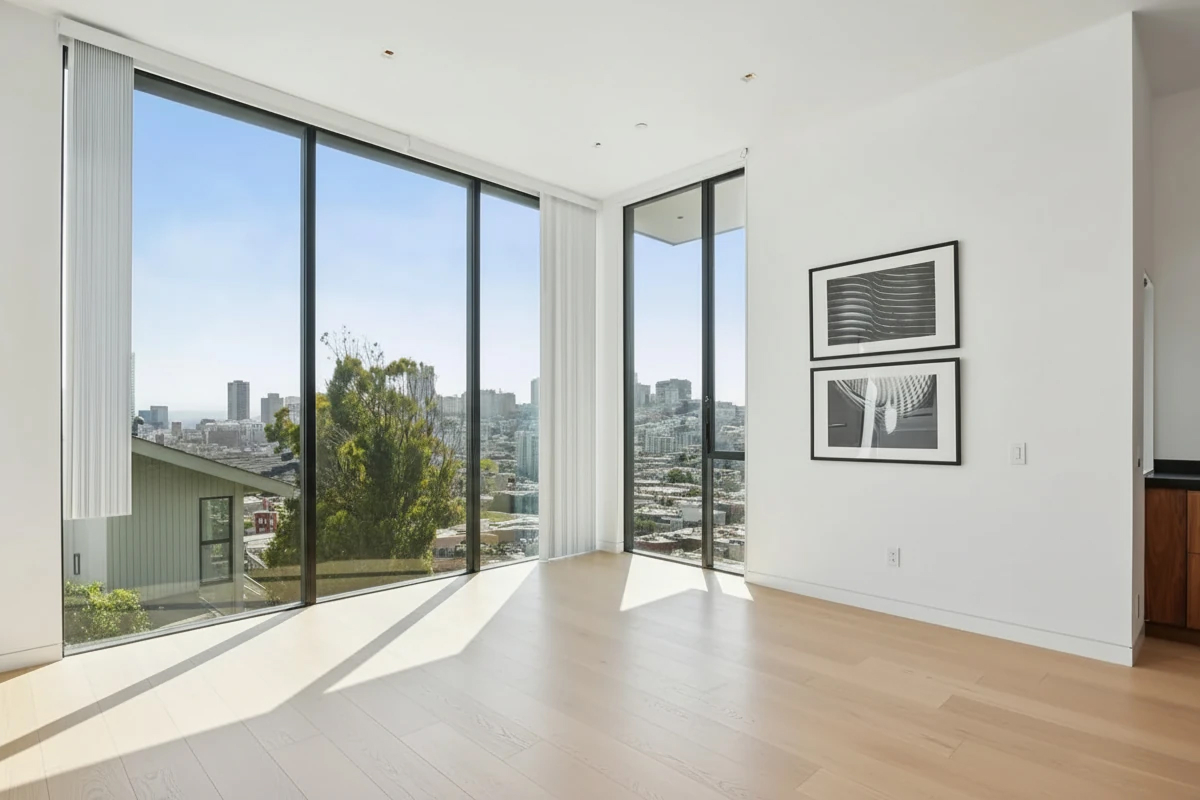

Virtual Staging • Coastal • Living Room
Does home staging help homes sell? (NAR 2025 data)
The most authoritative source is the NAR 2025 Profile of Home Staging, based on a February 2025 survey of 1,266 real estate agents.
- 29% of listing agents reported that staging increased the dollar value buyers offered by 1%–10% versus comparable un-staged homes. Roughly 20% saw a 1%–5% lift; about 10% saw a 6%–10% lift. (NAR, 2025)
- On a $400,000 home, a 1%–10% increase translates to $4,000–$40,000 in additional sale price. (NAR, 2025)
- 49% of sellers' agents said home staging reduced the time a home spent on the market. (NAR, 2025)
- 83% of buyers' agents said staging made it easier for a buyer to visualize the property as their future home. (NAR, 2025)
The single takeaway: staging's biggest, most consistent effect is on buyer visualization, which in turn supports faster sales and stronger offers.
How many homes actually get staged?
- 21% of sellers' agents stage all of their listings before going to market; another 10% stage only homes that are difficult to sell. (NAR, 2025)
- 51% of sellers' agents don't stage every home but recommend that sellers declutter and fix property faults before listing. (NAR, 2025)
- Industry estimates put staged homes at roughly 19% of U.S. home sales (about 1.3 million of ~6.9 million homes sold annually). (Industry research, 2025)
The gap between "staging works" (per NAR) and "only ~1 in 5 homes is staged" is exactly the gap virtual staging closes — by removing the cost and logistics barriers that keep agents from staging every listing.
Virtual staging vs traditional staging: the cost gap
This is where virtual staging changes the math.
| Method | Typical cost | Turnaround |
|---|---|---|
| AI virtual staging (e.g. StagerGo) | $0.05–$0.10 per image | 30–90 seconds |
| Human-edited virtual staging services | ~$50–$150 per image | 24–48 hours |
| Median virtual staging (all types) | ~$39 per room | Varies |
| Physical (traditional) staging | $500–$2,500/month, or $3,000–$5,000 to set up a vacant 4-bedroom home | Days to weeks |
- Independent analysis (The Zebra, 2025) found virtual staging can reduce staging costs by up to ~97% versus traditional physical staging.
- For a full listing, AI virtual staging typically runs $1–$3 total versus $240–$360+ for per-image human services or thousands for physical staging.

Create a photo of the same bedroom, virtually staged in a Coastal style. Include a light wood bed frame against the wall on the left, white and blue bedding, a jute rug under, and nautical-themed decor. A chair against the corner to the right. Some paintings on the wall, and a 1-2 green plants around the room, and a ceiling light in the middle of the room
Why virtual staging keeps growing
Three structural advantages drive adoption:
- Cost — pennies per image vs hundreds or thousands of dollars.
- Speed — modern AI staging returns results in under a minute, so a full set of listing photos can be staged in one sitting instead of waiting days.
- Flexibility — agents can test multiple styles per room and re-stage instantly, which is impractical with physical furniture or per-image services.
Because staging demonstrably helps homes sell (per NAR) but only ~1 in 5 listings is staged today, the affordable-staging gap is large — and virtual staging is the most direct way to close it.
Key takeaways
- Staging's strongest, best-documented benefit is buyer visualization (83% of buyers' agents — NAR 2025).
- Staging is associated with higher offers (29% of agents saw a 1–10% lift) and less time on market (49% of agents — NAR 2025).
- Only ~19% of homes are staged, largely due to cost — a barrier virtual staging removes.
- AI virtual staging is up to ~97% cheaper than physical staging and ~1,000× faster than per-image human services.
FAQ
Do staged homes sell faster?
Yes — 49% of sellers' agents in the NAR 2025 Profile of Home Staging reported that staging reduced the time a home spent on the market. Staging's effect on buyer visualization is the main driver.
How much more do staged homes sell for?
29% of listing agents (NAR 2025) said staging increased offers by 1%–10% versus comparable un-staged homes. On a $400,000 home, that's roughly $4,000–$40,000 in additional sale price.
Is virtual staging cheaper than traditional staging?
Dramatically. AI virtual staging costs about $0.05–$0.10 per image (a full listing for $1–$3), versus $500–$5,000+ for physical staging. Independent analysis found virtual staging can cut staging costs by up to ~97%.
What percentage of homes are staged?
Roughly 19% of U.S. home sales involve staging. Among agents, 21% stage all their listings and another 10% stage only hard-to-sell homes (NAR 2025).
Does virtual staging work as well as traditional staging?
For the benefit that matters most — helping buyers visualize the space — 83% of buyers' agents (NAR 2025) say staging helps, and virtual staging delivers that same visualization at a fraction of the cost, as long as the room's real structure (walls, windows, flooring) is preserved and the photos are disclosed as virtually staged.
Sources & citation
- NAR — 2025 Profile of Home Staging (National Association of Realtors): report · newsroom summary
- The Zebra — Home Staging Statistics (2026): thezebra.com
- RubyHome — Home Staging Statistics: rubyhome.com
Feel free to cite these statistics — a link back to this page (stagergo.com) is appreciated.
Related Articles and Resources
- Virtual Staging Cost Guide – Full pricing breakdown per photo, per listing, and per month
- Virtual Staging ROI Calculator – How much faster can staged homes sell?
- Virtual Home Staging Complete Guide – Cost, before-after examples, tools, and AI vs traditional
- Is Virtual Staging Worth It? – An honest look at the trade-offs
- Virtual Staging Disclosure Rules – MLS & legal compliance, including California's AB 723